Business-First HR:
Why People Strategy Is Now a Valuation Lever, Not a Support Function
For years, HR was treated as a necessary cost of doing business. Important, but secondary.
That era is over.
In today’s market, people strategy is no longer about programs, perks, or policy hygiene. It’s about execution, productivity, and enterprise value. The companies that understand this are pulling ahead. The ones that don’t are feeling it—in missed growth targets, leadership strain, and ultimately, valuation.
Welcome to the era of Business-First HR.
What is Business-First HR?
Business-First HR is a model where people decisions are explicitly tied to business outcomes, not HR activity.
Instead of asking:
“Do we have the right policies?”
“Are employees happy?”
“Did we roll out the program?”
The question becomes:
“Is our talent accelerating revenue?”
“Are managers enabling execution or slowing it down?”
“Are people risks being surfaced before they show up in the numbers?”
This shift matters because investors, boards, and founders are asking harder questions, and HR must be able to answer them in business language.

Is our talent accelerating revenue?
Why Traditional HR Is Falling Short
Many organizations still operate with an HR model designed for a different era: one where growth was predictable, labor was plentiful, and leadership depth wasn’t constantly tested.
Today’s reality looks very different:
Labor costs remain one of the largest line items on the P&L, often representing 60–70% of total operating expenses in people-intensive businesses (U.S. Bureau of Labor Statistics).
Only 23% of employees globally are engaged at work, while disengagement costs the global economy an estimated $8.9 trillion annually in lost productivity (Gallup, State of the Global Workplace).
Managers account for up to 70% of the variance in employee engagement, yet most receive little formal leadership training (Gallup).
In this environment, HR that focuses only on compliance, engagement surveys, or isolated initiatives quickly becomes disconnected from what actually drives results.
The problem isn’t that HR work is unimportant.
It’s that too much of it isn’t anchored to outcomes.
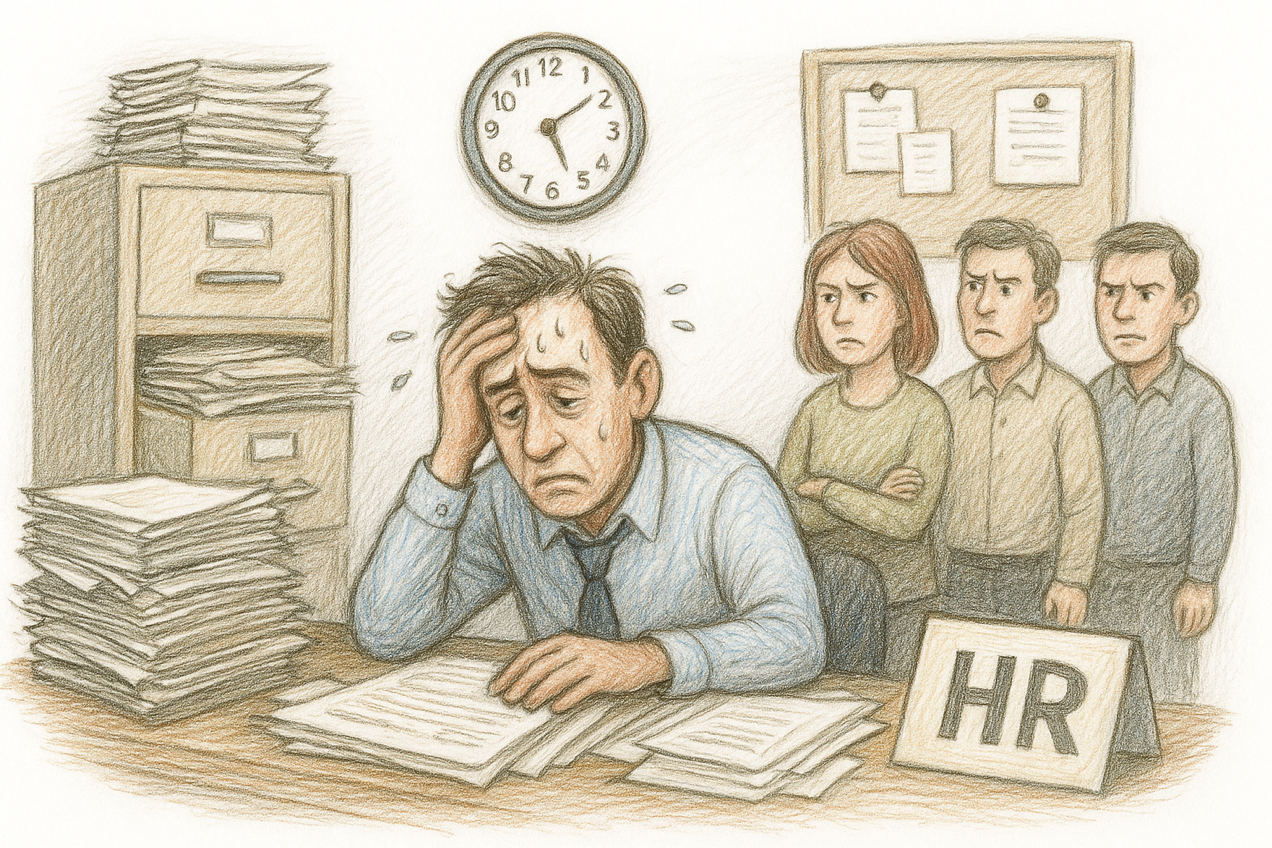
Traditional HR Falling Short
The Shift: From HR Activities to Business Impact
Business-First HR reframes the function around a simple idea:
If it doesn’t move the business, it’s not a priority.
That doesn’t mean ignoring culture or employee experience. It means designing them intentionally to support execution.
Here’s how that shift shows up in practice:
1. Workforce Decisions Tied to Growth Strategy
High-performing companies are 2.4x more likely to align talent strategy directly with business strategy (McKinsey & Company).
When hiring, org design, and role clarity lag growth plans, execution slows—and opportunity cost rises.
2. Manager Effectiveness Treated as a Core KPI
According to Gallup, companies that invest in manager development see:
Up to 18% higher productivity
10% higher customer loyalty
Lower voluntary turnover by up to 25%
Yet most organizations still promote managers based on technical success rather than leadership readiness—creating a silent drag on performance.
3. Retention Viewed as Financial Risk
Replacing an employee costs 50–200% of their annual salary, depending on role complexity and seniority (Society for Human Resource Management).
More importantly:
Losing a high-impact or revenue-adjacent role at the wrong time can delay growth initiatives by quarters—not weeks.
PE-backed companies experience significantly higher value erosion when key leaders exit within the first year post-transaction (McKinsey, Bain M&A research).
Not all turnover is equal. Business-First HR treats regrettable attrition as a balance-sheet issue, not an HR statistic.
4. HR Metrics That Matter to Boards and Investors
Forward-looking organizations track people metrics that directly map to value creation, including:
Revenue or gross profit per employee
Time-to-productivity for critical roles
Regrettable attrition in leadership and growth functions
Leadership bench readiness
Companies that actively measure and act on these indicators outperform peers by up to 30% in total returns to shareholders (McKinsey, Organizational Health Index).

HR Helping Grow the Business
Why Founders and PE Firms Care (Even If They Don’t Call It HR)
Founders and investors rarely say, “We need better HR.”
What they say is:
“We’re growing but it feels harder than it should.”
“Our managers are stretched thin.”
“We keep losing people we can’t afford to lose.”
“Execution is slipping between strategy and results.”
These are people problems with financial consequences.
Research consistently shows that companies with strong people and performance practices are:
More resilient in downturns
Better positioned for scale
More attractive at exit
Business-First HR sits at the intersection of strategy, execution, and value creation.
The Valuation Connection Most Companies Miss
Two companies can have identical financials—and very different valuations.
Why?
Because buyers evaluate future risk, not just historical results.
According to Bain & Company, many M&A deals fail to meet expectations, with people and integration issues cited as primary contributors
Leadership depth, cultural cohesion, and retention risk increasingly factor into diligence discussions—and directly influence valuation multiples.
A business-first people strategy reduces uncertainty, and uncertainty is what compresses valuation.
Final Thought
The companies that will outperform over the next decade won’t be the ones with the most HR programs.
They’ll be the ones that treat people strategy as a business strategy—with the same rigor, accountability, and ROI expectations.
That’s the future of HR.
And for founders and investors, it’s quickly becoming non-negotiable.